

Email:
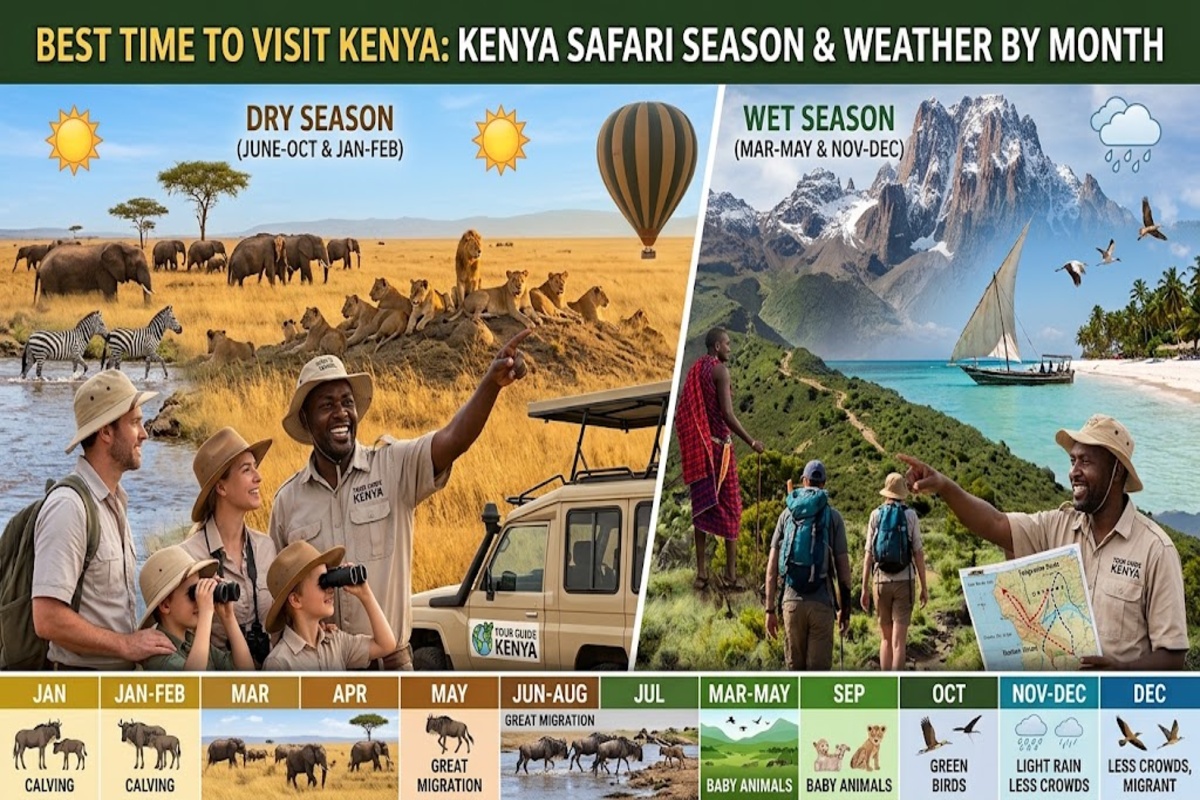

The best time to visit Kenya depends on what you want to experience during your trip. Kenya offers wildlife safaris, the Great Migration, beach holidays, mountain adventures and cultural experiences, and the ideal travel period can differ depending on your destination.
For most safari travelers, the drier months are popular because vegetation is generally shorter and wildlife can be easier to spot. Kenya Wildlife Service identifies July to December and December to March as high-season periods, while April to June is generally associated with the long rains.
There is no single month that is perfect for everyone. Your choice should depend on your safari destination, activities, preferred weather and whether you want to travel during a busy or quieter period.
If you are deciding when to visit Kenya, start with the type of holiday you want.
The drier periods are generally popular for wildlife viewing. July to October is especially attractive for travelers interested in the Maasai Mara and the Great Migration, while January to March can also provide favorable safari conditions.
July to October is commonly associated with the Great Migration in the Maasai Mara.
However, the movement of wildebeest depends on rainfall, grazing conditions and other natural factors. There is therefore no guaranteed date for a particular river crossing.
The Kenyan coast remains warm for much of the year. December to March is traditionally a favorable period for travelers looking for relatively dry and sunny beach conditions.
If your trip combines a safari with Mombasa, Diani, Watamu or another coastal destination, your travel dates can be planned around both wildlife and beach conditions.
Mountain areas have different weather conditions because of altitude. Mount Kenya and other high-altitude destinations can be considerably cooler than the coast and lowland safari areas.
If hiking is a major part of your trip, consider the specific mountain conditions rather than relying only on the general climate across Kenya.
The best time for Kenya safari depends on the type of wildlife experience you want.
July to October is one of the most popular safari periods.
Many wildlife areas experience relatively dry conditions, and shorter vegetation can make animals easier to spot. This period is also strongly associated with visits to the Maasai Mara during the Great Migration.
Because this is a popular travel period, accommodation and safari services can be in high demand.
The short rains can bring greener landscapes and changing scenery.
Wildlife viewing can still be rewarding, and some travelers prefer this period because the landscape is greener and some destinations may be quieter than during peak travel months.
January to March can provide generally favorable safari conditions in many areas.
This can be a good option for travelers who want a wildlife-focused trip without specifically planning around the Great Migration.
April to June is associated with the long rains.
Rain can make some safari roads more challenging, and Kenya Wildlife Service notes that some park roads may require four-wheel-drive vehicles during this period.
However, the rainy period also creates greener landscapes and can be suitable for travelers who are comfortable with changing weather.
The idea of a Kenya safari season can be misleading because Kenya offers wildlife experiences throughout the year.
There are busier periods when demand for accommodation and safari services is higher, but parks and reserves continue to offer wildlife experiences outside the traditional peak season.
Kenya Wildlife Service describes its parks and reserves as offering attractions throughout the year, while identifying July to December and December to March as high-season periods.
If you want dry conditions and classic wildlife viewing, the drier months may be more suitable. If you prefer greener scenery and are comfortable with rain, the wetter months can also be worth considering.
Kenya weather varies considerably from one region to another because of differences in geography and altitude.
The coast is generally warm and humid, the central highlands are cooler, while northern and eastern areas tend to be hotter and drier.
This means Nairobi, Maasai Mara, Amboseli, Samburu and Mombasa can experience noticeably different conditions at the same time.
When planning your trip, it is therefore better to consider the weather of each destination on your itinerary instead of relying on one general forecast for the whole country.
January is generally a warm period and can offer good safari conditions in many areas.
It can be suitable for travelers who want wildlife experiences without specifically planning around the Great Migration.
February is often a favorable month for safari travel, with generally good conditions in many wildlife areas.
It can also work well for travelers combining a safari with other parts of Kenya.
March can still provide good safari opportunities, although conditions begin changing as the long rains approach in some areas.
It can also be a useful month for combining wildlife travel with a coastal holiday.
April is associated with the beginning of the long-rain period in many parts of Kenya.
The landscapes can become greener, although rainfall may affect some safari roads and travel schedules.
May is typically part of the long-rain period.
Travelers visiting safari areas during this month should be prepared for wet conditions and potentially more difficult roads.
June can be a transition period as the long rains begin to ease in many areas.
Conditions gradually become drier as Kenya moves toward the popular July safari period.
July marks the beginning of one of Kenya's major safari travel periods.
Many areas experience relatively dry conditions, while the Maasai Mara can begin receiving migrating herds. The exact timing varies depending on rainfall and grazing conditions.
August is another highly popular month for safari travel.
It is particularly attractive to travelers interested in the Maasai Mara and the Great Migration. However, specific river crossings cannot be guaranteed on particular dates.
September can continue to provide favorable safari conditions.
Travelers visiting the Maasai Mara may still have opportunities to see migrating herds, while resident wildlife remains in the area.
October is another popular safari month.
Many safari areas can remain relatively dry, although conditions differ between destinations. The Great Migration may also still be present in the Maasai Mara depending on the movement of the herds.
November is commonly associated with the short rains.
The landscape can become greener, while travelers may experience changing weather during their safari.
December can be a busy travel period because of the holiday season.
It can also be a good month for combining a safari with a beach holiday, depending on the destinations and itinerary.
Planning a Kenya safari in July can be a strong choice for travelers interested in wildlife and the Maasai Mara.
July is part of a popular dry-season travel period, and the Maasai Mara may begin receiving migrating wildebeest around this time. However, the migration does not follow a fixed calendar.
Rainfall and grazing conditions influence the movement of the herds. If the Great Migration is your main reason for visiting, spending several days in the Mara gives you more opportunity to experience the movement of wildlife rather than planning around one specific event.
A Kenya safari in August is particularly popular with international travelers.
August generally offers favorable safari conditions in many areas and is commonly associated with the Great Migration period in the Maasai Mara.
Because this is a high-demand travel period, it is advisable to plan accommodation and safari arrangements early if you have specific camps, lodges or travel dates in mind.
The Maasai Mara can be visited throughout the year.
If your main interest is the Great Migration, July to October is the period commonly associated with the movement of migrating herds through the Mara.
However, migration is not the only reason to visit. The reserve supports resident wildlife throughout the year, so travelers can still enjoy a safari outside the main migration period.
Amboseli can also be visited throughout the year.
The drier months are popular for wildlife viewing because animals can be easier to spot around available water sources and vegetation may be less dense.
Amboseli is particularly known for its elephants and views of Mount Kilimanjaro, making it a useful addition to a wider Kenya safari itinerary.
Tsavo East and Tsavo West offer wildlife experiences throughout the year.
The drier periods are generally popular for game viewing, while wetter periods can produce greener landscapes.
Tsavo can also work well for travelers combining a safari with a coastal holiday because of its location between Nairobi and the Kenyan coast.
Yes, if you are comfortable with changing weather.
Rain does not mean that a safari cannot be enjoyable. The landscape can become greener, and some travelers appreciate the quieter atmosphere and changing scenery.
However, heavy rainfall can affect road conditions in some parks. KWS notes that some park roads may require four-wheel-drive vehicles during the long rains.
If you choose to travel during the rainy period, a flexible itinerary and an experienced safari operator can help you manage changing conditions.
Choosing the right travel dates is only one part of planning a successful Kenya safari.
Marutek Adventures can help you select destinations and travel periods based on the experience you want, whether your priority is wildlife, the Great Migration, a family safari or a combination of safari and beach travel.
Your itinerary can be planned around your available time, preferred destinations and travel dates. This can make it easier to combine destinations such as Maasai Mara, Amboseli and Tsavo without making the trip unnecessarily rushed.
Instead of simply choosing a month because it is considered the "best," Marutek Adventures can help you plan around the wildlife, weather and activities that matter most to you.
July to October is one of the most popular periods because many safari areas experience relatively dry conditions and wildlife can be easier to spot. January to March can also be a good period for safari.
Yes. July is popular because many safari areas are relatively dry, while the Maasai Mara can begin receiving migrating wildebeest. The exact timing of the migration varies each year.
Yes. August is a popular month for wildlife viewing and the Great Migration. The Maasai Mara can have large concentrations of wildebeest, although specific river crossings cannot be guaranteed.
The long rains generally occur around April to June, while shorter rains occur later in the year. Weather varies by region, and rainfall can affect road conditions in some safari areas.
Yes. Kenya's parks and reserves offer attractions throughout the year. The ideal month depends on whether you prioritize wildlife viewing, the Great Migration, beach travel, hiking, cultural experiences or quieter travel.
Ready to decide when to visit Kenya?
Whether you want to experience the Great Migration, plan a safari in July or August, explore Amboseli and Tsavo, or combine your safari with a beach holiday, Marutek Adventures can help you choose suitable destinations and travel dates.
Contact Marutek Adventures to start planning your Kenya safari around the experience you want.
Get exclusive safari deals and travel inspiration

