

Email:
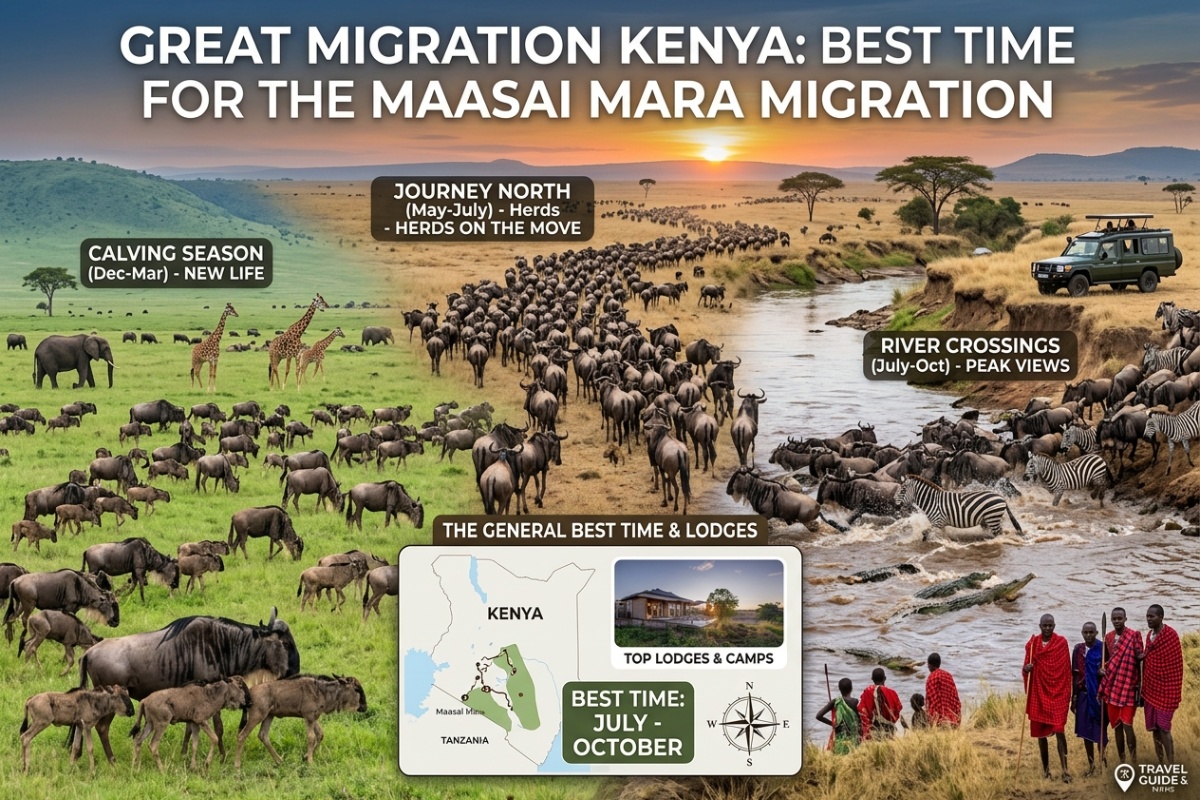

The Great Migration Kenya experience is one of the major reasons travelers visit the Maasai Mara. Each year, huge herds of wildebeest, zebra and other grazing animals move through the wider Serengeti-Mara ecosystem in search of fresh grass and water.
The migration is not a single event that happens on one exact date. It is a continuous natural cycle influenced by rainfall, grazing conditions and the movement of the animals. When the herds reach the Maasai Mara, travelers have the opportunity to see large concentrations of wildlife across the open plains.
The Kenya Great Migration offers a chance to experience wildlife on a much larger scale than a normal game drive.
Large herds of wildebeest move together with zebra and other herbivores, attracting predators such as lions, cheetahs, leopards and hyenas. The concentration of prey creates excellent opportunities for wildlife viewing.
One of the most famous parts of the migration is the movement across the Mara River. However, river crossings are unpredictable. Animals may gather along the river for hours before crossing, or they may move elsewhere instead. A particular crossing can never be guaranteed.
The wildebeest migration Kenya experience is mainly associated with the Maasai Mara, but the migration itself extends far beyond Kenya.
The herds move through the Serengeti in Tanzania and the Maasai Mara ecosystem in Kenya as part of an annual cycle. The movement is driven largely by the search for fresh grazing and water.
When the herds reach the Mara, travelers can encounter large groups of wildebeest and zebra together with the resident wildlife that makes the ecosystem famous.
The Maasai Mara migration is about more than wildebeest.
During the migration period, you may see large herds of wildebeest and zebra, together with predators that follow the abundance of prey. Lions and hyenas are common sights, while cheetahs and leopards may also be encountered depending on the area and conditions.
The Mara also has resident elephants, giraffes, buffalo and many other animals. This means your safari can still provide excellent wildlife viewing even when the migratory herds are not directly in front of your vehicle.
The Great Migration Kenya season is commonly associated with July to October, when the herds move into and through the Maasai Mara.
Magical Kenya describes the Great Migration as a year-round natural movement, with the most dramatic and iconic part occurring from July to October.
However, there is no fixed migration calendar. Rainfall and grazing conditions influence where the animals move, so the timing can vary from year to year.
July and August are popular months for travelers hoping to see the herds arriving in and moving through the Mara.
These months can provide opportunities to see large concentrations of wildebeest and zebra, as well as increased predator activity.
September can also be a strong period for migration-focused safaris. Large numbers of animals may still be present in the Mara while the wider ecosystem continues to offer excellent wildlife viewing.
October can provide opportunities to see the later part of the migration as some herds begin moving south again.
The exact timing remains dependent on natural conditions, so it is better to plan for the migration period rather than a specific date or guaranteed event.
River crossings are among the most famous scenes associated with the migration.
The herds may gather on the banks of the Mara River before eventually crossing. Sometimes the animals cross quickly, while at other times they remain near the river for a long period.
This uncertainty is part of the experience.
A safari operator cannot control when the animals cross. An experienced guide can, however, follow wildlife activity, monitor conditions and position the vehicle appropriately while following the applicable park rules.
A Great Migration safari combines traditional game viewing with the excitement of following a constantly changing natural event.
Game drives are planned around the areas where wildlife activity is taking place. Early morning and afternoon drives can provide opportunities to explore different parts of the Mara and search for both migratory and resident animals.
The number of nights you spend in the Mara also matters. A longer stay gives you more opportunities to explore different areas rather than relying on one game drive to provide the entire experience.
For travelers specifically interested in the migration, several nights in the Maasai Mara are generally more practical than a one-night visit.
More time means more game drives and more opportunities to encounter the herds. It also gives your guide flexibility to adjust the day's route based on recent wildlife activity.
If you have a longer holiday, the Mara can also be combined with other Kenyan destinations such as Amboseli, Lake Nakuru, Samburu or the coast.
Planning early is important because the migration period is a popular time to visit the Maasai Mara. Accommodation in preferred camps and lodges can become limited during busy travel periods.
It is also important to choose accommodation based on your safari priorities. The location of your camp or lodge can affect how much time you spend travelling to different wildlife-viewing areas.
Most importantly, allow enough time. Wildlife does not follow a timetable, and patience can make a significant difference during a migration safari.
An experienced guide can also help you make decisions during the safari based on current wildlife activity rather than following a rigid route.
No. Although wildebeest are the main attraction, the migration supports a much wider wildlife experience.
Zebra move alongside the herds, while predators are attracted by the concentration of prey. The Mara also has resident wildlife that remains in the ecosystem throughout the year.
This means you can enjoy a productive safari even if you do not see a river crossing.
Yes.
The Maasai Mara is a year-round wildlife destination, so a safari does not have to coincide with the migration to be worthwhile.
Kenya Wildlife Service states that Kenya's parks and reserves offer attractions throughout the year, although July to December and December to March are generally considered high seasons for wildlife viewing because of favorable conditions and easier wildlife visibility.
If your travel dates fall outside the main migration period, you can still look for lions, elephants, cheetahs, leopards, buffalo, giraffes, zebras and other wildlife.
Planning a migration safari requires more than simply choosing July, August or September.
Marutek Adventures can help you plan your Maasai Mara safari around your travel dates, accommodation preferences, budget and wildlife interests.
If your main goal is to see the migrating herds, look for river activity or enjoy a wider wildlife experience, your itinerary can be structured around those priorities.
Marutek Adventures can also help combine the Maasai Mara with other Kenyan destinations if you want to experience more of the country during the same trip.
The focus is on giving you enough time in the Mara while keeping your expectations realistic because wildlife movement cannot be predicted with complete accuracy.
The Great Migration is a remarkable natural cycle and one of the major wildlife attractions associated with the Maasai Mara.
The main period for experiencing the migration in Kenya is generally July to October, although the exact movement of the herds changes according to rainfall, grazing conditions and other natural factors.
If you want to experience the migration, plan for several days in the Mara rather than relying on one game drive or a guaranteed river crossing. Choosing suitable accommodation and working with an experienced guide can also make the safari more rewarding.
The main period associated with the migration in the Maasai Mara is generally July to October. July through September is particularly popular, while October can also provide opportunities as some herds begin moving south.
The main Maasai Mara migration period is generally July to October. However, the exact timing changes from year to year because the animals respond to rainfall, water and available grazing.
Yes. August is one of the popular months for visiting the Maasai Mara during the migration period. Large herds may be present, although the location of the animals and the possibility of a river crossing cannot be guaranteed.
Several nights are preferable for a migration-focused safari. A longer stay gives you more game-drive opportunities and more time to explore different areas of the Mara.
Yes. The migration itself is a year-round natural cycle, although the part associated with large concentrations of migratory herds in the Maasai Mara is generally most prominent around July to October. The Mara also offers excellent resident wildlife viewing throughout the year.
Ready to experience the migration in the Maasai Mara?
Marutek Adventures can help you plan a safari around your travel dates, wildlife interests, accommodation preferences and available time. Whether you want to follow the wildebeest herds, explore the Mara or combine your safari with other Kenyan destinations, you can plan an itinerary suited to your trip.
Start planning your Great Migration safari with Marutek Adventures and experience the wildlife and landscapes of the Maasai Mara.
Get exclusive safari deals and travel inspiration

