

Email:
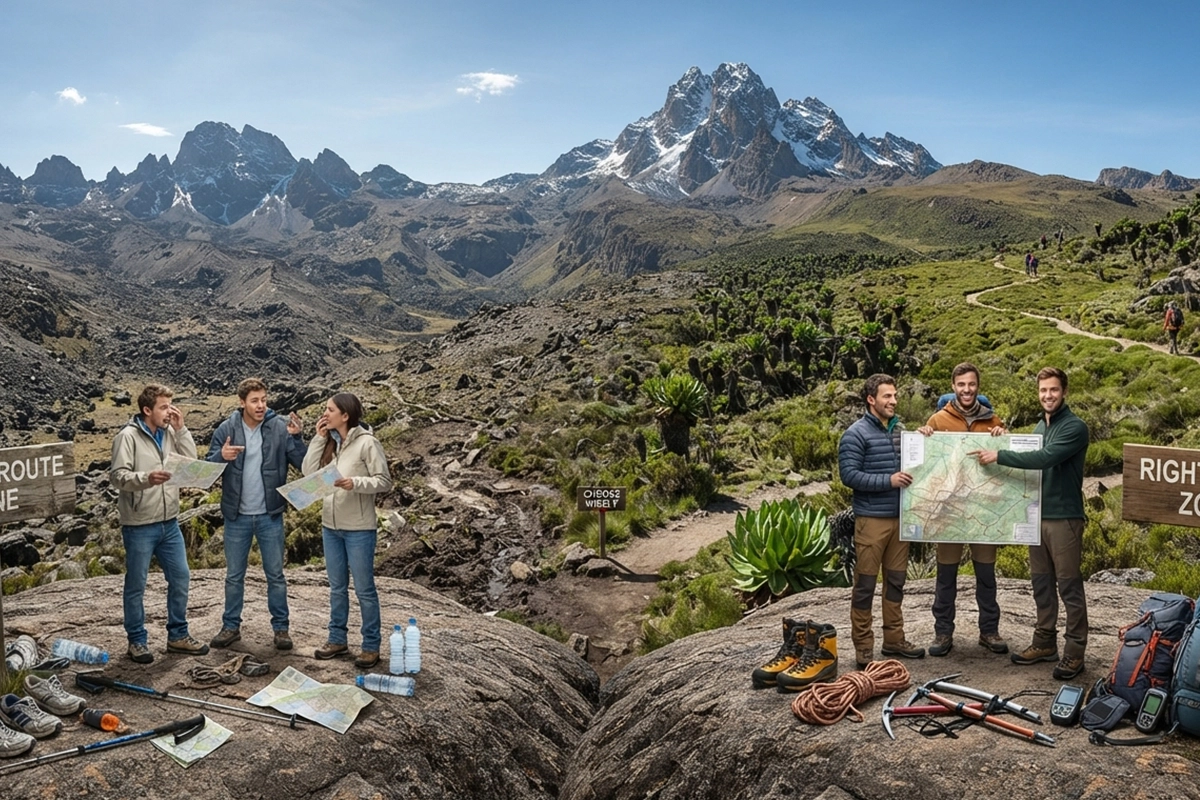

Planning to climb Mount Kenya is exciting, but one decision can significantly affect your entire experience: choosing the right route.
Mount Kenya has several trekking routes, each offering different landscapes, levels of difficulty, walking conditions and opportunities for acclimatisation. Some are known for gradual ascents, while others have steeper sections or more demanding terrain.
Choosing a route simply because it is popular or takes fewer days can lead to unnecessary exhaustion, difficulty adjusting to altitude and an uncomfortable trekking experience.
Your preferred route should match your physical fitness, hiking experience, available time and the kind of scenery you want to enjoy.
Whether you are preparing for your first mount kenya hike or planning another mountain adventure, understanding the available routes will help you make a better decision.
Not every trail on Mount Kenya offers the same experience. The route you select determines how you approach the mountain, the landscapes you encounter, the camps you use and how gradually you gain altitude.
For example, a route with a gradual ascent may provide more opportunities for acclimatisation, while a steeper approach may be physically demanding for someone who is not used to mountain hiking.
Before settling on one of the mt kenya routes, consider the following factors:
Physical fitness: Some routes have steeper and more demanding sections than others.
Hiking experience: Beginners may benefit from a more gradual itinerary.
Acclimatisation: The number of days available for adjusting to altitude is important.
Scenery: Different routes offer different views, valleys, lakes and vegetation.
Available time: Some itineraries require more days than others.
Budget: Transport, accommodation, park fees, guides and camping arrangements can affect the total cost.
The best route is not necessarily the shortest or most popular. It is the one that provides a suitable balance between your abilities, safety and trekking expectations.
The Sirimon Route approaches Mount Kenya from the northwest and is one of the popular choices among trekkers.
It is often considered suitable for hikers who prefer a relatively gradual approach to higher elevations. The route passes through different vegetation zones, including forest, moorland and alpine landscapes.
Sirimon offers an opportunity to experience the changing scenery of Mount Kenya while following an ascent that is generally less steep than some alternative approaches.
Highlights include:
Forest landscapes during the lower sections.
Open moorland with distinctive mountain vegetation.
Views of the surrounding peaks.
Access to established mountain camps.
Opportunities to plan a multi-day ascent.
Sirimon is worth considering if you are a first-time trekker, prefer a gradual ascent or want an itinerary that allows time for acclimatisation.
However, the route still involves high-altitude walking, long distances and challenging conditions. Being a relatively gradual option does not mean it requires no preparation.
The Naro Moru Route approaches Mount Kenya from the west. It is one of the commonly used access routes and is known for its relatively direct approach towards the higher mountain areas.
However, it has sections that can be challenging, particularly for hikers who are not accustomed to steep terrain.
One of the best-known features of this route is the Vertical Bog, a section associated with wet and difficult walking conditions.
Depending on the weather, hikers may encounter muddy ground, uneven surfaces and sections that require extra care.
This route may suit hikers who are comfortable with steeper terrain and want a more direct approach.
Before choosing it, consider your fitness level, the expected weather and the number of days included in your itinerary.
If you are a beginner, discuss the route with your trekking guide rather than assuming that a shorter approach will be easier.
The Chogoria Route approaches Mount Kenya from the eastern side. It is particularly popular among trekkers who want to experience the mountain's impressive scenery.
Unlike routes selected mainly for their direct approach, Chogoria is known for its dramatic landscapes, including valleys, lakes, waterfalls and mountain viewpoints.
Depending on your itinerary, the route may offer views of:
Lake Ellis
Lake Michaelson
Gorges Valley
The surrounding alpine landscape
Distinctive mountain vegetation and rock formations
These features make Chogoria an attractive option for hikers interested in photography and exploring the natural beauty of Mount Kenya.
Chogoria is worth considering if scenery is an important part of your trekking experience and you have enough time for a well-planned itinerary.
However, the route can involve long walking distances and demanding terrain. Your guide should help you understand the daily walking requirements before you book.
One of the most common questions among first-time hikers is which route offers the easiest introduction to Mount Kenya.
There is no single answer because the experience depends on your fitness, acclimatisation, itinerary and weather conditions.
However, Sirimon is often considered a suitable starting point for beginners because of its relatively gradual ascent.
Gradual altitude gain: Choose an itinerary that gives your body time to adjust to increasing elevation.
Walking distance: Understand how many kilometres you will cover each day and how long the walking sections are expected to take.
Camping arrangements: Find out where you will sleep and what facilities are available along the route.
Guide support: Make sure your trek is properly organised and that you have qualified mountain guides.
Descent arrangements: Ask how you will descend after reaching your trekking objective.
Do not choose an itinerary only because it is advertised as a beginner-friendly option. Ask for the full day-by-day programme and understand what each stage involves.
You do not always have to use the same route for both ascending and descending Mount Kenya.
Some trekking itineraries use one route to approach the mountain and another to descend. This allows hikers to experience different landscapes instead of retracing the same trail.
One popular combination is ascending through Sirimon and descending through Chogoria.
Experience different sides of Mount Kenya.
Enjoy the gradual approach associated with Sirimon.
Explore the scenic landscapes along Chogoria.
See more of the mountain during one trekking adventure.
Create a varied itinerary for photography and sightseeing.
However, combining routes requires proper transport and logistical arrangements. Your trekking operator should organise the route, accommodation, park access and exit arrangements.
The number of days you need depends on your chosen route, summit objective and preferred pace.
Some itineraries take approximately three days, while others extend to five days or longer.
For first-time hikers, choosing a longer itinerary can provide more time for acclimatisation and reduce the pressure of rushing towards the summit.
More time to adjust to altitude: Gradual ascent can help reduce the risk of altitude-related problems.
Better energy management: You can spread the walking distance across more days instead of rushing through difficult sections.
More time to enjoy the scenery: You have opportunities to appreciate the mountain rather than focusing only on reaching the summit.
A more comfortable experience: Additional time can make the overall trekking schedule less demanding.
When comparing mount kenya trekking routes, look beyond the total number of days. Review the daily elevation gain, walking distance, overnight camps and summit schedule.
Even experienced travellers can make mistakes when planning a mountain trek. For beginners, these decisions can have an even greater impact.
A shorter itinerary may appear convenient, but it can involve faster altitude gain. This may make the trek more difficult and increase the risk of altitude sickness.
A route that suits an experienced hiker may be unnecessarily demanding for someone who rarely exercises. Be honest about your fitness and choose an appropriate itinerary.
Reaching Point Lenana is an important goal for many trekkers, but the journey should also allow enough time for acclimatisation, rest and enjoying the mountain.
Wet and cold conditions can affect trail difficulty. Check the expected weather and carry suitable clothing and equipment.
Before paying for a trekking package, confirm whether the price includes park fees, guides, accommodation, meals, transport, camping equipment and porter services.
Once you have selected a route, the next step is preparing for the physical and practical demands of the journey.
Your preparation should begin several weeks before the planned climbing date.
Include regular walking, hiking, stair climbing and strength exercises in your training programme.
Gradually increase the distance and difficulty of your practice walks so that your body becomes accustomed to extended periods of activity.
Your packing list should include:
Comfortable hiking boots with good grip.
Waterproof jacket and trousers.
Warm clothing and thermal layers.
Hiking backpack.
Gloves and a warm hat.
Headlamp or torch.
Sunglasses and sunscreen.
Water bottles and personal medication.
Confirm the equipment provided by your operator before purchasing or packing additional items.
If you are travelling from outside the Mount Kenya region, plan how you will get to the starting point and where you will stay before or after the trek.
You can explore Marutek Adventures' hotel booking services when arranging accommodation.
For transport arrangements, consider the available airport and safari transfers or car hire services.
Selecting a trekking route involves more than choosing a name from a list. You need to understand the terrain, daily walking requirements, altitude gain, accommodation and transport arrangements.
Marutek Adventures helps travellers organise adventure experiences and travel arrangements in Kenya. Getting assistance with your itinerary can help you understand the available options before committing to a particular trek.
Whether you are interested in Sirimon, Naro Moru, Chogoria or a combination of routes, discuss your experience, fitness level, preferred dates and expectations when planning your adventure.
Explore the available Marutek Adventures tours and tours and travel services to plan your wider trip.
Choosing the right Mount Kenya route can make a significant difference to your trekking experience. Sirimon offers a relatively gradual approach, Naro Moru has more direct and challenging sections, while Chogoria is known for its impressive mountain scenery.
The right choice depends on your fitness, hiking experience, available time and preferred adventure.
Instead of selecting a trail simply because it is shorter or popular, review the itinerary carefully and make sure it allows enough time for acclimatisation and safe trekking.
With proper preparation and a suitable route, you can enjoy more of Mount Kenya's landscapes and make your climbing adventure a rewarding experience.
The three main trekking routes commonly used to access Mount Kenya are Sirimon, Naro Moru and Chogoria. Each offers different terrain, scenery and trekking experiences.
Sirimon is often considered a good option for beginners because it offers a relatively gradual ascent. However, beginners should still choose an itinerary that allows adequate acclimatisation.
Yes. Some itineraries combine Sirimon for the ascent and Chogoria for the descent. This allows trekkers to experience different parts of the mountain.
Most trekking itineraries take approximately three to five days, depending on the route and schedule. Longer itineraries may provide more time for acclimatisation.
Naro Moru has some challenging sections, including the Vertical Bog, which can become particularly difficult in wet conditions. Your fitness level, weather and itinerary will influence how demanding the route feels.
Choosing the right trail is the first step towards a rewarding mountain adventure. Contact Marutek Adventures to discuss your preferred route, explore suitable trekking arrangements and start planning your Mount Kenya experience.
Get exclusive safari deals and travel inspiration

