

Email:

Planning a trip to Kenya often starts with choosing the places you want to visit. However, if climbing Mount Kenya is part of your plans, choosing the right travel dates is just as important as selecting your trekking route.
Mount Kenya offers an unforgettable experience, with changing landscapes, alpine vegetation, dramatic valleys and spectacular views. However, weather conditions can affect trail quality, visibility, walking comfort and the overall difficulty of the climb.
Some months offer more favourable trekking conditions, while others bring heavy rainfall, muddy paths and unpredictable mountain weather. Travelling without considering these seasonal differences can make your adventure more challenging than expected.
Whether you are planning your first mount kenya trek, combining mountain hiking with a safari or exploring Kenya during a longer holiday, understanding the seasons will help you make better travel decisions.
Kenya has different climatic conditions depending on the region. The coastal areas are generally warm and humid, the central highlands are cooler, and northern parts of the country are generally hotter and drier.
Mount Kenya has its own high-altitude weather conditions, which can change quickly even when the surrounding areas are experiencing favourable weather.
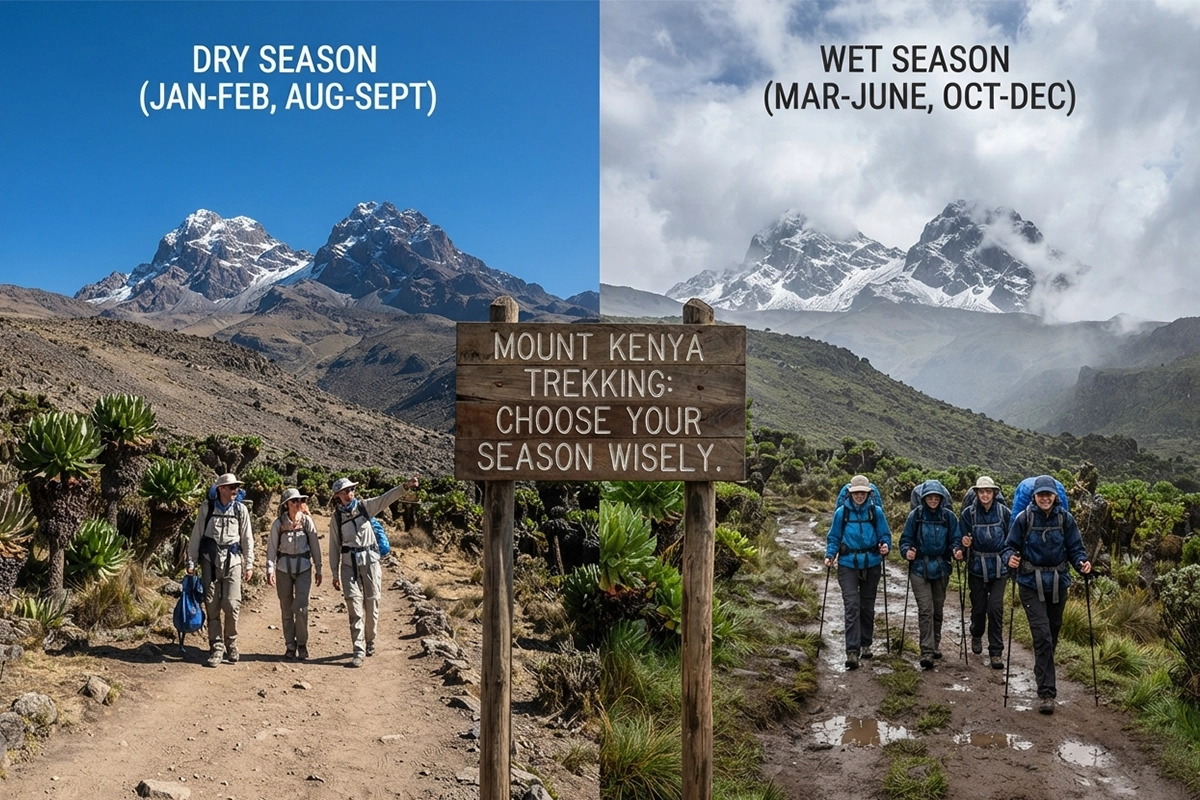
For most trekkers, January to February and July to September are generally preferred periods for mount kenya trekking. These months fall within the mountain's two main drier trekking windows.
January and February are among the preferred months for climbing Mount Kenya. Conditions are generally drier, and clearer mornings can provide excellent mountain views.
This period is worth considering if you want to:
Enjoy better chances of clear summit views.
Experience generally firmer trails.
Explore the mountain during a drier period.
Combine hiking with other destinations in Kenya.
However, favourable weather does not mean warm conditions throughout the climb. Temperatures at higher elevations can drop significantly, particularly during the night and early morning summit attempt.
The period between July and September is another popular window for mountain hiking.
Conditions are generally drier, although temperatures at higher elevations can be particularly cold. Clear mornings may offer excellent opportunities for photography and enjoying the mountain scenery.
This period is suitable for travellers who want to combine a mountain adventure with other experiences during the Kenyan tourism season.
Regardless of the month, always check the latest mountain conditions before departure because rainfall and visibility can change unexpectedly.
One of the biggest mistakes travellers make is assuming that Mount Kenya has the same weather conditions throughout the year.
The mountain experiences two main rainy periods: the long rains, generally from March to May or June, and the short rains, commonly from October to December.
These periods can affect the condition of trekking trails and make some sections more difficult to navigate.
The long rains can make mountain hiking more demanding.
During this period, trekkers may encounter:
Muddy and slippery trails.
Reduced visibility due to cloud cover.
Wet camping conditions.
Colder conditions when clothing becomes wet.
More difficult walking through forest and moorland sections.
April and May are generally among the wetter months. If you are planning your first climb, consider whether you can travel during a more favourable trekking period.
The short rains can bring occasional showers and changing weather conditions.
Although rainfall may not be as persistent as during the long rains, it can still affect visibility and trail conditions.
Travellers who choose this period should remain flexible with their plans and carry appropriate waterproof equipment.
It is possible to trek outside the main dry seasons, but the itinerary should account for the weather and the experience of the hikers.
Selecting unsuitable dates can affect more than your comfort. It can influence how much of the mountain you experience and how easily you complete your planned itinerary.
For example, a trail that is manageable in dry conditions may become slippery and difficult after rainfall. Cloud cover can also reduce visibility, limiting opportunities to enjoy the mountain's scenery.
Here are some problems that can arise when you do not plan around seasonal conditions.
Rain can make some sections muddy, particularly around forest and moorland areas. This can slow your walking pace and increase the effort required to complete each stage.
Mount Kenya is known for its dramatic peaks, valleys and alpine landscapes. However, mist and cloud cover can reduce visibility and affect photography opportunities.
Higher elevations are cold even during the drier months. Rain and strong winds can make the experience more uncomfortable if you are not carrying suitable clothing.
Severe weather can affect planned activities and may require adjustments to your route or schedule. Always allow some flexibility and follow your guide's advice.
Not every traveller visits Kenya for mountain hiking alone. You may want to combine your Mount Kenya adventure with wildlife safaris, beach holidays, cultural experiences or other outdoor activities.
In such cases, the best travel period depends on the experiences you want to include.
If you want to combine mountain hiking with a wildlife safari, the dry seasons are often a practical starting point for planning.
July to September is particularly popular for safari travel because it coincides with the Great Migration period in the Maasai Mara, although wildlife viewing opportunities exist throughout the year.
January and February can also provide favourable conditions for combining mountain trekking with wildlife experiences in different parts of Kenya.
You can explore the available Marutek Adventures tours when planning a trip that combines outdoor adventures and sightseeing.
If you want to relax along the Kenyan coast after your climb, consider including destinations such as Diani, Watamu and Mombasa in your itinerary.
December to March is generally a popular period for coastal holidays because of the warm and sunny conditions.
However, the coast and Mount Kenya have different weather patterns. Plan your mountain and beach activities separately rather than assuming that conditions will be identical in both regions.
Explore Marutek Adventures' tours and travel services when organising a wider holiday across Kenya.
Kenya also offers cultural experiences, local communities, historical attractions and nature-based activities.
You can include these experiences before or after your mountain adventure, depending on your available time.
If you are travelling as a group, consider discussing activities that can fit into your itinerary through Marutek Adventures' team-building services.
A weekend trip may be enough to explore some destinations in Kenya, but it is generally not enough for a properly planned Mount Kenya summit trek.
This is an important consideration for travellers who have limited time and want to fit several activities into a short visit.
Most trekking itineraries require approximately three to five days, depending on the route, walking pace and acclimatisation schedule. Longer itineraries may be preferable for people who need more time to adjust to altitude.
If you only have a weekend in Kenya, consider activities that do not require a multi-day mountain climb.
Depending on your starting location, you could plan:
A short nature excursion.
A visit to a nearby attraction.
A cultural experience.
A day trip to a scenic destination.
A short wildlife experience where available.
If reaching Point Lenana is your main objective, allocate enough days for the climb rather than trying to fit it into a weekend.
A rushed itinerary can leave insufficient time for acclimatisation and increase the physical demands of the experience.
Choosing a suitable month is only one part of planning your trek. You also need to consider your route, fitness level, available time and travel arrangements.
Use the following considerations when deciding when to climb.
Mount Kenya has several trekking routes, including Sirimon, Naro Moru and Chogoria. Their terrain and walking conditions differ.
Some routes may become particularly challenging after rainfall. Discuss the expected conditions with your guide before selecting your dates.
Do not select an itinerary simply because it reaches the summit quickly.
Your body needs time to adjust to increasing altitude. Choose a schedule that allows gradual ascent and appropriate rest periods.
Seasonal information provides a general guide, but mountain weather can change quickly.
Check the latest forecast and seek local advice before beginning your climb.
If you are visiting Kenya from another country or travelling from a different town, allow time for arrival, transport, accommodation and preparation.
Avoid scheduling your trek immediately after a long international journey without considering the time needed to rest and prepare.
Even when travelling during the preferred dry seasons, you should prepare for cold temperatures, rain and changing weather.
Mount Kenya's elevation creates conditions that are very different from those experienced in Nairobi or other lowland destinations.
Your packing list should include:
Clothing
Thermal base layers.
Warm fleece or insulated jacket.
Waterproof jacket and trousers.
Warm gloves and a hat.
Extra hiking socks.
Footwear
Comfortable hiking boots with good grip.
Suitable walking socks.
Gaiters where necessary.
Personal equipment
Hiking backpack.
Headlamp or torch.
Sunglasses.
Sunscreen.
Reusable water bottles.
Personal medication and basic first-aid supplies.
Other essentials
Sleeping equipment, depending on your package.
Snacks and personal food requirements.
Identification and booking documents.
Camera and spare batteries.
Before packing, confirm what your trekking operator provides so that you do not carry unnecessary equipment.
Your Mount Kenya adventure should not begin with confusion about where to stay or how to reach the mountain.
If you are travelling from Nairobi, another Kenyan town or an international destination, arrange your transport and accommodation before your trekking date.
This is especially important during popular travel periods when accommodation and transport services may be in greater demand.
Consider arriving in the region before your trek so that you have enough time to prepare.
You can explore Marutek Adventures' hotel booking services when arranging accommodation for your trip.
If you are arriving by air, organise transport from the airport to your accommodation or onward destination.
Marutek Adventures offers airport and safari transfers to help travellers organise their journeys.
If you want more flexibility when exploring different destinations, you can also enquire about car hire services.
Planning these arrangements early can help you avoid unnecessary delays and make better use of your travel time.
Choosing the right travel period, arranging accommodation and organising transport can be challenging when you are visiting Kenya for the first time.
Marutek Adventures helps travellers organise travel experiences and adventure activities across Kenya. Whether you are planning a mountain trek, wildlife safari or a wider holiday, having a clear itinerary can make the experience easier to manage.
You can discuss your preferred travel dates, activities, accommodation needs and transport arrangements before making your booking.
Explore Marutek Adventures' tours and tours and travel services to start planning your trip.
The best time to visit Kenya for a Mount Kenya trek depends on the weather conditions, your preferred route and the kind of experience you want.
January to February and July to September are generally preferred trekking periods because they offer more favourable conditions. The rainy seasons can bring muddy trails, reduced visibility and additional challenges, making careful preparation especially important.
If you also want to enjoy wildlife safaris, beaches or other attractions, plan your activities according to the different weather conditions across the country.
Most importantly, allow enough time for your trek, prepare for changing mountain conditions and organise your travel arrangements in advance.
With the right timing and preparation, your Mount Kenya adventure can become one of the most memorable parts of your visit to Kenya.
January and February are among the preferred months for climbing Mount Kenya. August and September are also popular because they generally fall within a drier trekking period. However, mountain weather can change at any time.
Yes, trekking is possible during rainy periods, but the experience can be more demanding. Wet and slippery trails, cloud cover and cold conditions may affect your progress. Proper equipment and guidance are important.
Most trekking itineraries take approximately three to five days, depending on the selected route and schedule. First-time hikers may benefit from a longer itinerary that allows more time for acclimatisation.
Yes. July is generally part of a favourable trekking period on Mount Kenya. However, temperatures at higher elevations can be very cold, so hikers should carry suitable clothing and prepare for changing weather.
Yes. You can combine mountain trekking with wildlife safaris, coastal holidays and other travel experiences. The best itinerary depends on your available time, preferred destinations and the seasonal conditions in each region.
Choosing the right travel dates can make a significant difference to your experience. Whether you want to climb Mount Kenya, explore Kenya's wildlife destinations or combine your trip with a coastal holiday, proper planning is essential.
Contact Marutek Adventures to discuss your travel plans, explore available experiences and organise your next Kenya adventure.
Get exclusive safari deals and travel inspiration

